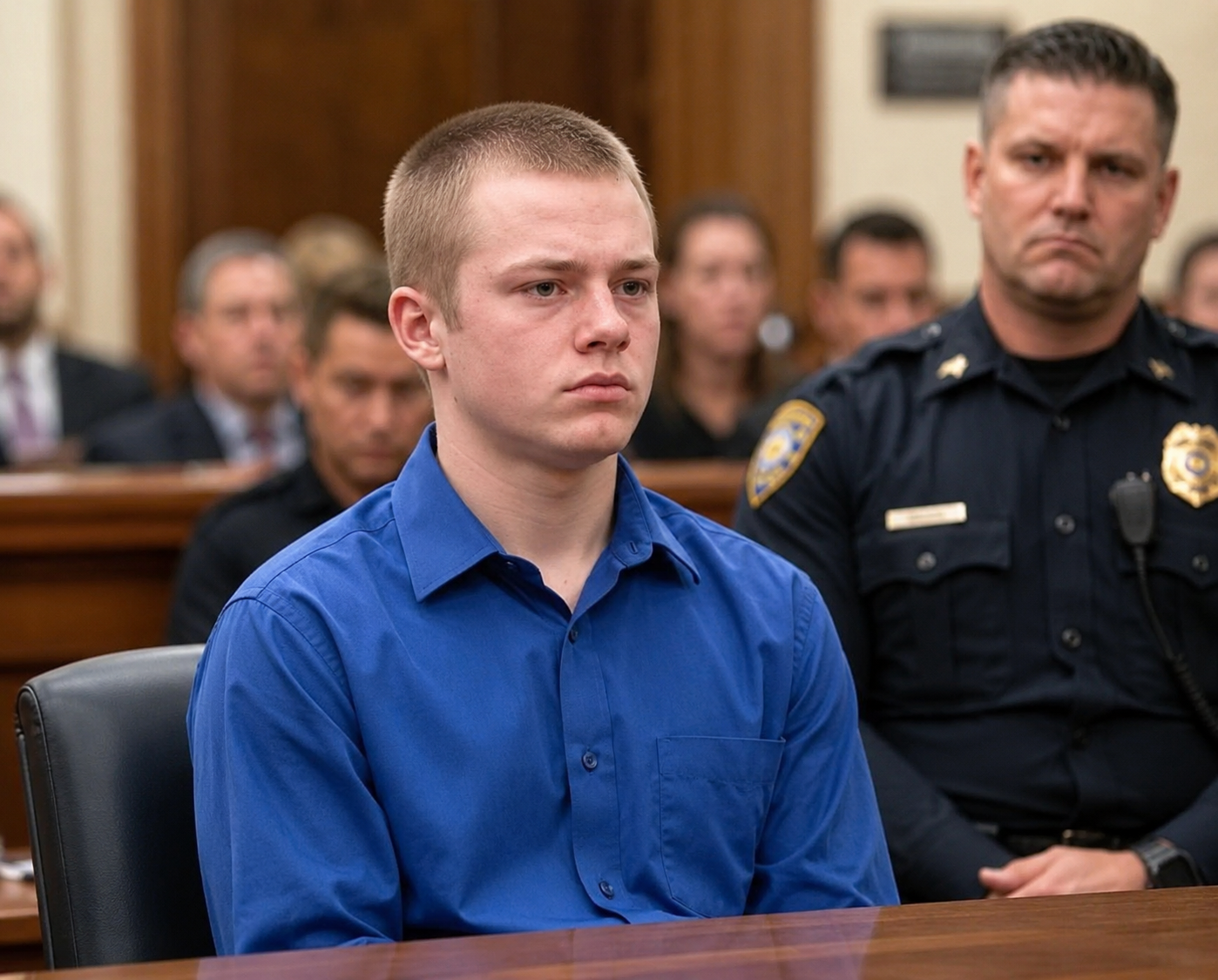
Extreme Sentence Raises Difficult Questions About Juvenile Accountability, Victims’ Rights, and the Possibility of Rehabilitation
A teenager stood in a courtroom wearing shackles and listened as a sentence of 452 years was announced. The number was far beyond the length of any possible human life, making the punishment functionally permanent even though it was not formally described as an execution.
The atmosphere reportedly shifted the moment the sentence was delivered. The teenager trembled, the courtroom became silent, and his mother’s sobs broke through the stillness as the reality of the decision settled over the family.
For those present, the sentence was more than a collection of years. It represented the closing of every realistic path back into ordinary life and the beginning of a future that would unfold almost entirely behind prison walls.
A Sentence Designed to Last Beyond a Lifetime
A 452-year prison term cannot be completed by any person. Its meaning is therefore symbolic as well as practical, communicating that the teenager is expected to remain incarcerated for the rest of his natural life.
Unlike a conventional life sentence, a term measured in centuries places enormous emphasis on the scale of the harm connected to the case. Each portion of the sentence can be understood as recognizing separate suffering, separate fear, and separate lives permanently changed.
Supporters view that structure as an important acknowledgment of victims. They argue that reducing the punishment to a single manageable number could fail to reflect the full impact of what happened and the number of people left carrying its consequences.
Critics see the same number differently. To them, a sentence extending for centuries is not simply a serious punishment but a declaration that personal growth, maturity, remorse, and rehabilitation will never be considered meaningful.
The contrast between those views has transformed the teenager’s sentencing into a wider moral debate. It raises questions not only about one defendant, but also about what society expects the criminal justice system to accomplish.