Former President Barack Obama is once again at the center of national attention, sparking conversations, debates, and renewed scrutiny across the United States. The former president, who remains one of the most recognizable and influential political figures in modern American history, continues to attract enormous public interest long after leaving the White House. But whenever Obama’s name begins trending, the reaction is rarely simple. Supporters, critics, political commentators, and ordinary Americans often find themselves on completely different sides of the conversation.
This time, however, the headline has caught people’s attention for a particularly uncomfortable reason. A growing discussion surrounding the former president has brought renewed questions about his public influence, political legacy, and the role he continues to play in America’s deeply divided political environment.
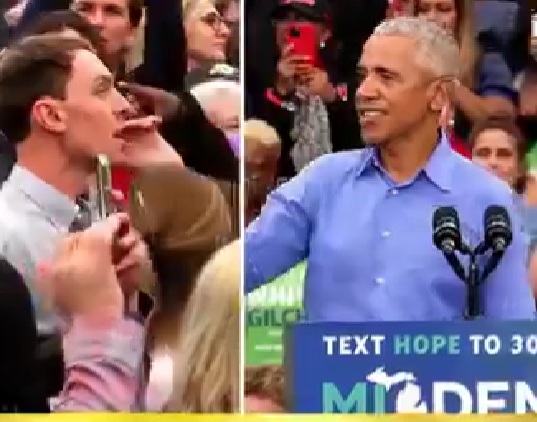
While some Americans believe Obama deserves recognition for his years of public service and the historic significance of his presidency, others argue that former presidents should be held to the same standards of accountability as anyone else who has occupied the nation’s highest office.
And that is precisely why his latest appearance in the headlines has generated so much interest.
A Former President Who Has Never Really Left the National Conversation
When Barack Obama became the 44th president of the United States in January 2009, he made history as the first African American to hold the office. His election represented a defining moment in American politics, attracting international attention and creating enormous expectations about the country’s future.
For millions of Americans, his presidency represented progress, possibility, and a new chapter in the nation’s history.
But political influence does not necessarily disappear when someone leaves the White House.
More than a decade after completing his second term, Obama remains a powerful voice in American public life. His speeches continue to attract attention, his political opinions are frequently discussed, and his appearances at major events often become national talking points.
Unlike many former presidents who gradually move away from the political spotlight, Obama has maintained a significant public presence.
Through interviews, speeches, social media, political appearances, and his involvement in Democratic Party activities, he has continued to influence conversations about the direction of the country.
That visibility also comes with a disadvantage.
Every statement, public appearance, and political intervention can become the subject of intense criticism. Even relatively ordinary comments can quickly turn into major discussions when they come from someone with Obama’s profile.
Why His Name Continues to Divide Americans
Few modern American political figures generate reactions as strong as Barack Obama.
For his supporters, he represents a historic presidency, an important period of political change, and a leader who helped reshape the Democratic Party. They frequently point to his healthcare reforms, economic recovery efforts, and diplomatic initiatives as important parts of his legacy.
His critics, meanwhile, have spent years questioning his administration’s decisions, foreign policy, domestic policies, and the long-term consequences of certain political choices.
This disagreement is not new.
During his presidency, Obama faced intense opposition from Republican lawmakers, conservative commentators, and voters who disagreed with his political agenda. At the same time, he maintained a strong following among Americans who believed his administration represented a necessary change in Washington.
Those divisions did not disappear when he left office.
In many ways, they became part of the broader political environment that continues to shape American public life.
Today, whenever Obama’s name enters a major political discussion, people often bring their existing opinions about his presidency into the conversation.
Some defend him immediately. Others question his motives or decisions. And many simply want more information before deciding what they think.
The Complicated Legacy of Eight Years in the White House
Evaluating a former president is never as straightforward as examining a single headline.
A presidency involves thousands of decisions, unexpected international developments, economic challenges, domestic disagreements, and consequences that can continue for generations.
Obama’s eight years in office included several major developments that shaped the United States.
One of the most significant was the Affordable Care Act, commonly known as Obamacare. The healthcare legislation expanded access to health insurance for millions of Americans and became one of the defining achievements of his administration.
However, the law also generated considerable political opposition. Critics questioned its costs, regulations, and impact on the healthcare system.
His administration also oversaw the final stages of the American economic recovery following the devastating financial crisis of 2008.
Unemployment gradually declined, financial markets recovered, and the country experienced a prolonged period of economic expansion.
Nevertheless, many Americans continued to struggle with stagnant wages, rising living costs, and concerns about economic inequality.
Foreign policy was another complicated part of his presidency.
Obama authorized the operation that killed Osama bin Laden in 2011, a major moment in the United States’ fight against al-Qaeda.
His administration also pursued diplomatic engagement with Iran, supported international climate agreements, and attempted to reshape America’s relationship with several countries.
But these decisions were not universally welcomed.
Some critics argued that his administration was too cautious in certain international conflicts, while others questioned the consequences of American involvement in overseas military operations.
These disagreements demonstrate why Obama’s presidency continues to attract such intense historical and political examination.
There are achievements that supporters celebrate, decisions that critics challenge, and unresolved questions that remain part of the national conversation.
Social Media Has Changed the Way Political Controversies Spread
Another reason Obama’s name can quickly become a trending topic is the enormous influence of social media.
In the past, a controversial political statement might have appeared on television, been discussed by newspaper columnists, and gradually entered the wider public conversation.
Today, the process is dramatically different.
A short video clip, a screenshot, or a few sentences taken from a longer interview can reach millions of people within hours.
Facebook, X, Instagram, TikTok, and YouTube have transformed how Americans consume political information.
A discussion that begins with one public statement can quickly become a nationwide argument.
Supporters share clips defending the former president. Critics circulate their own interpretations. Political commentators publish reaction videos, while ordinary users contribute their opinions.
The result is often a conversation that becomes much larger than the original event.
There is also a growing challenge: distinguishing verified information from speculation.
Not every viral headline accurately represents what happened. Not every widely shared quotation contains the full context of the original statement. And not every claim circulating online has been independently confirmed.
This is particularly important when discussing major political figures.
A headline suggesting controversy does not automatically establish wrongdoing, and criticism should not be confused with evidence.
For readers trying to understand what is actually happening, the original statement, complete interview, official documentation, and reliable reporting are far more valuable than an isolated social media post.
The Influence of Former Presidents in Modern America
One of the larger questions surrounding Obama’s continued public presence concerns the role former presidents should play after leaving office.
Should former presidents remain actively involved in political discussions?
Should they use their experience and influence to support candidates, criticize government decisions, or encourage voters to participate in elections?
Or should they gradually step away and allow the next generation of political leaders to establish its own direction?
There is no universally accepted answer.
American history offers several examples of former presidents who continued to influence national discussions after their administrations ended.
Some remained active in public life, while others largely withdrew from political activities.
Obama has chosen to maintain a visible role, particularly within the Democratic Party and broader conversations about American democracy.
His influence can be significant, especially during major election cycles.
When a former president speaks about political leadership, democratic institutions, or the future of the country, his words can attract attention far beyond the immediate audience.
That influence can be valuable to supporters who appreciate his experience.
However, it can also attract criticism from people who believe the country needs to move beyond its previous political leadership.
Americans Are Asking Bigger Questions About Political Accountability
Beyond any individual headline, the renewed attention surrounding Obama reflects a much larger issue facing American politics.
Many Americans have become increasingly frustrated with political institutions and the people who lead them.
Trust in government, media organizations, political parties, and public officials has become an important subject of national discussion.
Voters from different political backgrounds frequently express concerns about transparency, accountability, and whether elected officials truly understand the challenges ordinary families face.
These concerns extend far beyond one political party or administration.
They include questions about government spending, immigration, healthcare, foreign policy, economic opportunity, public safety, and the responsibilities of political leaders.
For some Americans, Obama’s continued influence is part of this larger discussion.
They question why former presidents remain so involved in political conversations after their time in office has ended.
Others argue that experience should not automatically become irrelevant simply because a president has completed two terms.
Both perspectives reflect a broader disagreement about political leadership and the relationship between former officeholders and the public.
The Difference Between Criticism and Proven Facts
There is an important distinction that should not be overlooked whenever a political controversy becomes popular online.
Public criticism is not the same thing as verified misconduct.
A political figure can face strong opposition, uncomfortable questions, and intense public scrutiny without every accusation being accurate.
This applies to Barack Obama just as it applies to every other former president.
The public has every right to question political decisions, examine official records, challenge public statements, and demand transparency.
At the same time, serious allegations should be supported by credible evidence rather than assumptions or viral speculation.
In an environment where emotionally charged headlines can spread faster than corrections, responsible reporting matters more than ever.
The strongest political discussions are not necessarily the loudest ones. They are the ones based on information that people can examine, question, and independently verify.
Why Obama Still Matters to the Future of American Politics
Even though Obama is no longer president, his political legacy remains connected to several important questions about America’s future.
His presidency changed the Democratic Party, influenced a generation of political activists, and created a historical milestone that will remain significant regardless of how historians ultimately evaluate his administration.
His supporters continue to see him as an influential voice capable of encouraging civic participation and defending democratic principles.
His critics continue to examine his decisions and challenge the political direction associated with his administration.
Meanwhile, younger Americans are developing their own opinions about his presidency, often through a combination of historical accounts, documentaries, interviews, and social media discussions.
That generational shift may become increasingly important.
The political environment of 2026 is very different from the one Obama encountered when he first entered the White House in 2009.
Technology has transformed political communication. Social media has changed how campaigns operate. Public debates have become faster, more immediate, and often more confrontational.
The issues facing the country have also evolved.
Economic uncertainty, international conflicts, technological developments, immigration, healthcare, and the future of American democracy remain central subjects of political debate.
In this environment, Obama’s words and actions will likely continue to attract attention.
Whether Americans agree with him or disagree with him, his historical position ensures that he will remain part of conversations about the country’s political direction.
One Thing Is Certain: The Debate Is Far From Over
Barack Obama’s return to the headlines serves as another reminder of how difficult it can be for influential political figures to escape public scrutiny.
His supporters may continue defending his record, while his critics may use every new controversy as an opportunity to revisit decisions they have questioned for years.
But beyond the political arguments, there is a much larger issue worth considering.
Americans deserve accurate information, transparent leadership, and meaningful discussions about the people who have held positions of extraordinary responsibility.
That expectation should apply regardless of political affiliation, popularity, or historical significance.
A former president should not be immune from criticism simply because he once occupied the Oval Office. Equally, criticism should be based on facts rather than assumptions or political hostility.
For now, Obama’s name continues to attract attention, demonstrating that his influence on American politics remains a subject of considerable public interest.
And perhaps that is the most interesting part of the entire discussion: even years after leaving the White House, Barack Obama remains a figure capable of bringing Americans into a national conversation.
Whether that conversation leads to renewed support, stronger criticism, or a deeper examination of his political legacy remains to be seen.
Because in American politics, leaving the White House does not necessarily mean leaving the spotlight.